
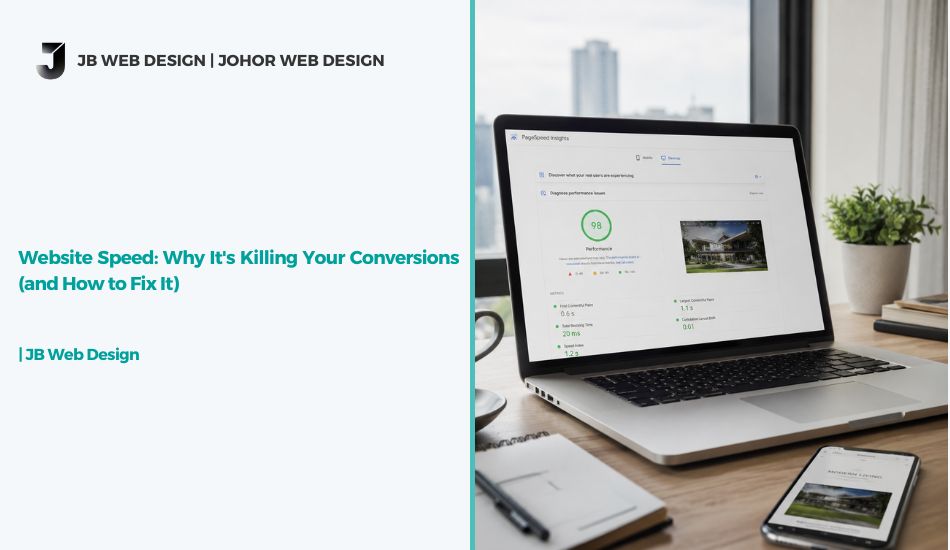
Website Speed: Why It’s Killing Your Conversions (and How to Fix It)
The Short Answer First
If your website takes more than 3 seconds to load, you’re probably losing customers before they even see what you sell. That’s the blunt truth. Slow website speed doesn’t just annoy visitors — it directly drags down your website conversion rate, your Google rankings, and ultimately, your revenue.
The fix isn’t complicated, but it does require attention: compress your images, choose better hosting, clean up your code, and monitor your page load time regularly. Businesses in Malaysia that treat website speed optimization as an ongoing habit — not a one-time fix — consistently see more form submissions, more calls, and more sales from the same amount of traffic.
Now, let’s walk through why this happens and exactly what you can do about it.
Why Website Speed Directly Impacts Your Conversion Rate
Here’s something most business owners underestimate: people don’t wait around anymore. Malaysian internet users, especially on mobile, expect a page to load almost instantly. When website speed lags, visitors don’t file a complaint — they simply leave, often without you ever knowing they were there.
This isn’t just a UX inconvenience. It’s a direct hit to your bottom line. A sluggish site erodes trust before a single word of your content is even read. Visitors subconsciously associate a fast, responsive website with a professional, reliable business — and a slow one with the opposite. If you’ve ever wondered why your traffic looks decent but your leads don’t match up, this quick self-check is a good place to start.
Search engines have caught onto this too. Google factors website speed into how it ranks pages, meaning a slow site doesn’t just lose visitors on arrival — it may struggle to attract them in the first place. Google’s own Core Web Vitals metrics are built specifically around measuring this kind of real-world loading experience.
Page Load Time: What Malaysian Businesses Need to Know
Page load time is the single most measurable factor behind a slow website — and it’s usually the first thing to check when conversions start slipping.
A few realities specific to the Malaysian market:
- Mobile-first browsing is the norm.
Most local visitors are on mobile data, not fibre broadband, so every extra second of page load time hits harder here than it might in markets with faster average connections. - Hosting matters more than people think.
Cheap, overcrowded shared hosting is one of the most common culprits behind poor page load time for small and medium businesses in Malaysia. - Heavy, unoptimized images are everywhere.
Product photos and banner images uploaded straight from a phone camera, without compression, are a leading cause of bloated page load time.
If you’re unsure whether your current setup is holding you back, tools like Google PageSpeed Insights can give you a free, non-technical read-out of exactly where the slowdown is happening — and our own guide to Core Web Vitals explains what those numbers actually mean for your business.
Website Speed Optimization: The Fixes That Actually Work
This is where most businesses either fix the problem properly — or apply a band-aid that breaks again in six months. Real website speed optimization isn’t a single plugin install. It’s a combination of several small, deliberate changes:
- Compress and resize images before uploading. This alone can cut load times dramatically without any visible drop in quality.
- Choose hosting built for performance, not just the cheapest monthly rate. Shared hosting might save money upfront but often costs you conversions later.
- Minimize unnecessary plugins and scripts. Every extra tool your website loads adds weight — and weight slows things down.
- Enable caching and a content delivery network (CDN), especially if you’re serving customers across different states or countries.
- Run regular technical check-ups. Speed isn’t a “set and forget” job. Sites naturally slow down over time as content, plugins, and media pile up — which is why ongoing website maintenance matters as much as the initial build.
The businesses that treat website speed optimization as routine maintenance — rather than an emergency fix — are the ones that keep their conversion rates stable as they scale.
Common Mistakes Malaysian Businesses Make With Website Speed
A few patterns show up again and again when we audit local websites:
- Assuming a nice-looking design automatically means good performance. It doesn’t. A beautiful site can still be painfully slow underneath.
- Ignoring website speed until sales visibly drop, instead of monitoring it proactively.
- Adding more marketing spend to drive traffic to a slow site — which usually means paying more to lose more leads.
If your overall online performance feels inconsistent, it might not just be a speed issue — it could point to a bigger gap in strategy. This digital marketing health check is worth a look before assuming the problem is technical alone.
How to Tell If Slow Speed Is Costing You Right Now
You don’t need to guess. A few honest questions can tell you a lot:
- Does your homepage feel instant, or is there a noticeable pause before it loads?
- Are your bounce rates higher on mobile than desktop?
- Have your conversions dropped even though traffic has stayed steady or grown?
If you answered yes to any of these, website speed is worth investigating before you spend another ringgit on ads or content.
Final Word
Website speed isn’t a technical detail buried in the back end — it’s a frontline factor in whether visitors trust you, stay on your site, and eventually buy from you. The good news is that fixing it is entirely within reach, and the return on that effort shows up quickly in your numbers.
If you’d rather have this handled properly than DIY it, our team can audit your site’s speed, fix what’s slowing you down, and build the ongoing strategy that keeps your conversions climbing. Explore our digital marketing services or get in touch for a straightforward conversation about where your website currently stands.



Website Speed: Why It’s Killing Your Conversions (and How to Fix It)
The Short Answer First
If your website takes more than 3 seconds to load, you’re probably losing customers before they even see what you sell. That’s the blunt truth. Slow website speed doesn’t just annoy visitors — it directly drags down your website conversion rate, your Google rankings, and ultimately, your revenue.
The fix isn’t complicated, but it does require attention: compress your images, choose better hosting, clean up your code, and monitor your page load time regularly. Businesses in Malaysia that treat website speed optimization as an ongoing habit — not a one-time fix — consistently see more form submissions, more calls, and more sales from the same amount of traffic.
Now, let’s walk through why this happens and exactly what you can do about it.
Why Website Speed Directly Impacts Your Conversion Rate
Here’s something most business owners underestimate: people don’t wait around anymore. Malaysian internet users, especially on mobile, expect a page to load almost instantly. When website speed lags, visitors don’t file a complaint — they simply leave, often without you ever knowing they were there.
This isn’t just a UX inconvenience. It’s a direct hit to your bottom line. A sluggish site erodes trust before a single word of your content is even read. Visitors subconsciously associate a fast, responsive website with a professional, reliable business — and a slow one with the opposite. If you’ve ever wondered why your traffic looks decent but your leads don’t match up, this quick self-check is a good place to start.
Search engines have caught onto this too. Google factors website speed into how it ranks pages, meaning a slow site doesn’t just lose visitors on arrival — it may struggle to attract them in the first place. Google’s own Core Web Vitals metrics are built specifically around measuring this kind of real-world loading experience.
Page Load Time: What Malaysian Businesses Need to Know
Page load time is the single most measurable factor behind a slow website — and it’s usually the first thing to check when conversions start slipping.
A few realities specific to the Malaysian market:
- Mobile-first browsing is the norm.
Most local visitors are on mobile data, not fibre broadband, so every extra second of page load time hits harder here than it might in markets with faster average connections. - Hosting matters more than people think.
Cheap, overcrowded shared hosting is one of the most common culprits behind poor page load time for small and medium businesses in Malaysia. - Heavy, unoptimized images are everywhere.
Product photos and banner images uploaded straight from a phone camera, without compression, are a leading cause of bloated page load time.
If you’re unsure whether your current setup is holding you back, tools like Google PageSpeed Insights can give you a free, non-technical read-out of exactly where the slowdown is happening — and our own guide to Core Web Vitals explains what those numbers actually mean for your business.
Website Speed Optimization: The Fixes That Actually Work
This is where most businesses either fix the problem properly — or apply a band-aid that breaks again in six months. Real website speed optimization isn’t a single plugin install. It’s a combination of several small, deliberate changes:
- Compress and resize images before uploading. This alone can cut load times dramatically without any visible drop in quality.
- Choose hosting built for performance, not just the cheapest monthly rate. Shared hosting might save money upfront but often costs you conversions later.
- Minimize unnecessary plugins and scripts. Every extra tool your website loads adds weight — and weight slows things down.
- Enable caching and a content delivery network (CDN), especially if you’re serving customers across different states or countries.
- Run regular technical check-ups. Speed isn’t a “set and forget” job. Sites naturally slow down over time as content, plugins, and media pile up — which is why ongoing website maintenance matters as much as the initial build.
The businesses that treat website speed optimization as routine maintenance — rather than an emergency fix — are the ones that keep their conversion rates stable as they scale.
Common Mistakes Malaysian Businesses Make With Website Speed
A few patterns show up again and again when we audit local websites:
- Assuming a nice-looking design automatically means good performance. It doesn’t. A beautiful site can still be painfully slow underneath.
- Ignoring website speed until sales visibly drop, instead of monitoring it proactively.
- Adding more marketing spend to drive traffic to a slow site — which usually means paying more to lose more leads.
If your overall online performance feels inconsistent, it might not just be a speed issue — it could point to a bigger gap in strategy. This digital marketing health check is worth a look before assuming the problem is technical alone.
How to Tell If Slow Speed Is Costing You Right Now
You don’t need to guess. A few honest questions can tell you a lot:
- Does your homepage feel instant, or is there a noticeable pause before it loads?
- Are your bounce rates higher on mobile than desktop?
- Have your conversions dropped even though traffic has stayed steady or grown?
If you answered yes to any of these, website speed is worth investigating before you spend another ringgit on ads or content.
Final Word
Website speed isn’t a technical detail buried in the back end — it’s a frontline factor in whether visitors trust you, stay on your site, and eventually buy from you. The good news is that fixing it is entirely within reach, and the return on that effort shows up quickly in your numbers.
If you’d rather have this handled properly than DIY it, our team can audit your site’s speed, fix what’s slowing you down, and build the ongoing strategy that keeps your conversions climbing. Explore our digital marketing services or get in touch for a straightforward conversation about where your website currently stands.