
7 Reasons Your Online Store Isn’t Converting (E-commerce CRO)
Here’s the short answer: if your online store not converting problem has you confused despite decent traffic, the issue is almost never one big thing — it’s usually two or three small friction points stacked on top of each other, each one quietly pushing a percentage of visitors away before checkout. Fix the right ones, and conversions climb without needing a single extra visitor.
Before we go through each reason, here’s the quick list.
The Quick List
The most common reasons behind an online store not converting are:
- Unclear value proposition or missing trust signals
- Slow load speed and a weak first impression
- A confusing or overly long checkout process
- Unexpected costs that appear late in checkout
- No urgency or unclear calls-to-action
- A mobile experience that wasn’t properly tested
- Weak product pages with thin descriptions or no reviews
If two or three of these sound familiar, you’re not dealing with a traffic problem — you’re dealing with a leaking funnel.
Why Online Store Not Converting Rarely Has One Simple Cause
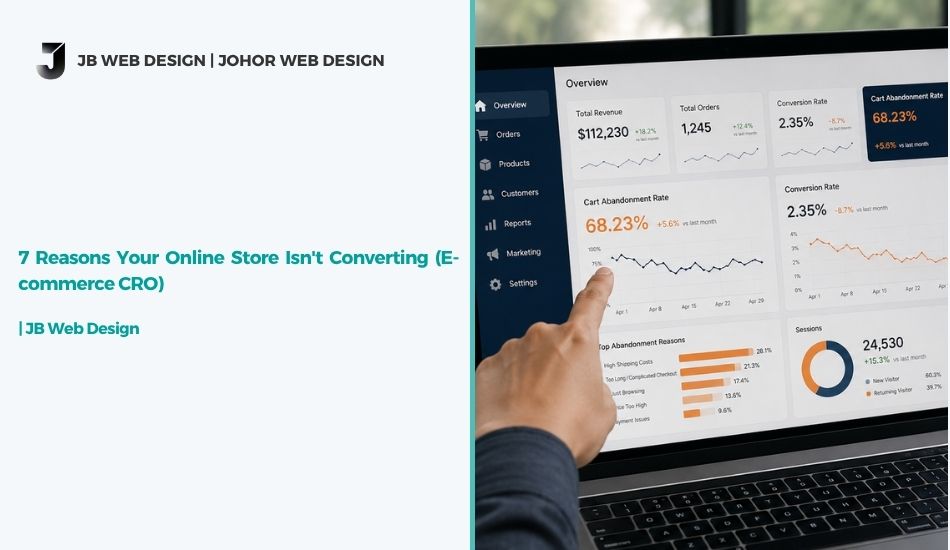
Industry research on shopping behaviour backs this up. According to the Baymard Institute’s cart abandonment research, a large share of shoppers who add items to their cart never complete the purchase, and unexpected costs at checkout are consistently cited as one of the top reasons — alongside a checkout process that feels longer or more complicated than shoppers expect.
That’s the pattern behind most online store not converting cases: it’s rarely a single dramatic flaw. It’s usually a combination of small hesitations that add up, each one giving a shopper one more reason to close the tab instead of finishing the order.
Ecommerce Conversion Rate Optimization: Where to Start Looking
Ecommerce conversion rate optimization isn’t about redesigning the entire store — it’s about finding where visitors are quietly dropping off and fixing that specific point first. Here’s what that looks like in practice, reason by reason:
1. Unclear value proposition or missing trust signals.
If a first-time visitor can’t tell within seconds why they should buy from you instead of a bigger, more familiar platform, hesitation kicks in immediately. Reviews, clear return policies, and real product photos do a lot of quiet work here.
2. Slow load speed and a weak first impression.
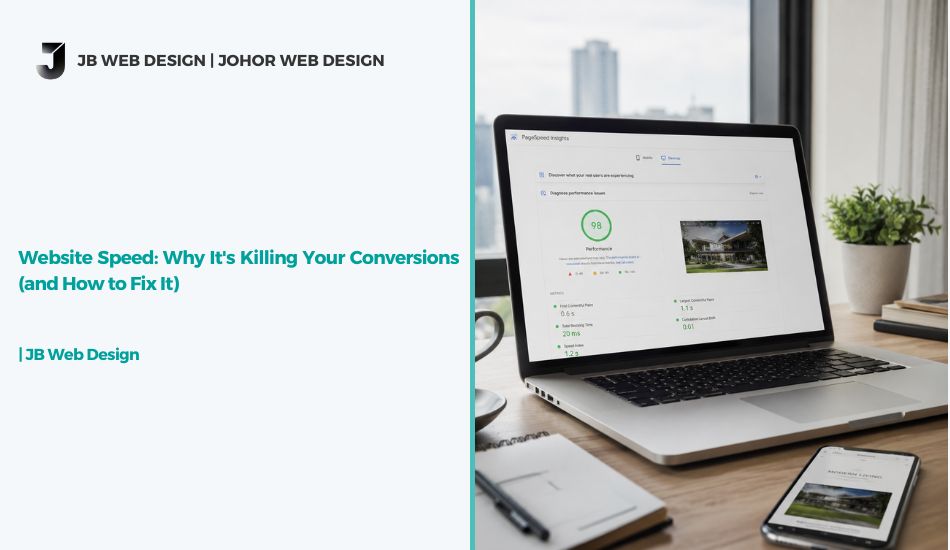
Shoppers form judgements about a site almost instantly, and a slow-loading store gives them time to reconsider before they’ve even seen your products. We’ve covered this in more depth in our piece on why a website’s first seconds matter, and the same principle applies directly to online stores.
3. A confusing or overly long checkout process.
Every extra field, unnecessary account creation step, or unclear progress indicator gives a shopper another moment to abandon. Simpler is almost always better here.
4. Unexpected costs at checkout.
This is one of the most well-documented reasons for lost sales — shoppers who see a fair product price get frustrated when shipping or handling fees suddenly appear at the final step. Showing the full cost earlier, even on the product page, tends to prevent this entirely.
5. No urgency or unclear calls-to-action.
A product page that doesn’t clearly tell a visitor what to do next, or gives no reason to buy today rather than “later,” often just gets bookmarked and forgotten.
6. A mobile experience that wasn’t properly tested.
Most Malaysian shoppers are browsing and buying from their phones, so a checkout that’s clunky on mobile — even if it works fine on desktop — is quietly costing sales every single day.
7. Weak product pages.
Thin descriptions, low-quality images, or an absence of reviews leave shoppers without enough confidence to complete the purchase, especially for anything above an impulse-buy price point.
Fixing an Online Store Not Converting: What to Prioritise
You don’t need to fix all seven at once. Start by tracing where in your funnel visitors actually drop off — cart, checkout, or product page — and prioritise the fix that matches. If the issue traces back to the store itself feeling slow, cluttered, or hard to navigate, that’s usually a sign it’s time for a proper website revamp rather than another round of small patches.
If tracking down where visitors are dropping off feels overwhelming alongside running the business, a broader digital marketing health check is a good starting point — it looks at the funnel as a whole, not just the checkout page in isolation.
Final Thoughts
An online store not converting isn’t usually a sign that your products or marketing aren’t working — it’s a sign that friction is building up somewhere between the click and the checkout. Ecommerce conversion rate optimization is really just the process of finding and removing that friction, one honest fix at a time. If you’d rather have someone map out exactly where your store is losing customers, feel free to get in touch and we’ll walk you through what’s actually happening in your funnel.


7 Reasons Your Online Store Isn’t Converting (E-commerce CRO)
Here’s the short answer: if your online store not converting problem has you confused despite decent traffic, the issue is almost never one big thing — it’s usually two or three small friction points stacked on top of each other, each one quietly pushing a percentage of visitors away before checkout. Fix the right ones, and conversions climb without needing a single extra visitor.
Before we go through each reason, here’s the quick list.
The Quick List
The most common reasons behind an online store not converting are:
- Unclear value proposition or missing trust signals
- Slow load speed and a weak first impression
- A confusing or overly long checkout process
- Unexpected costs that appear late in checkout
- No urgency or unclear calls-to-action
- A mobile experience that wasn’t properly tested
- Weak product pages with thin descriptions or no reviews
If two or three of these sound familiar, you’re not dealing with a traffic problem — you’re dealing with a leaking funnel.
Why Online Store Not Converting Rarely Has One Simple Cause
Industry research on shopping behaviour backs this up. According to the Baymard Institute’s cart abandonment research, a large share of shoppers who add items to their cart never complete the purchase, and unexpected costs at checkout are consistently cited as one of the top reasons — alongside a checkout process that feels longer or more complicated than shoppers expect.
That’s the pattern behind most online store not converting cases: it’s rarely a single dramatic flaw. It’s usually a combination of small hesitations that add up, each one giving a shopper one more reason to close the tab instead of finishing the order.
Ecommerce Conversion Rate Optimization: Where to Start Looking
Ecommerce conversion rate optimization isn’t about redesigning the entire store — it’s about finding where visitors are quietly dropping off and fixing that specific point first. Here’s what that looks like in practice, reason by reason:
1. Unclear value proposition or missing trust signals.
If a first-time visitor can’t tell within seconds why they should buy from you instead of a bigger, more familiar platform, hesitation kicks in immediately. Reviews, clear return policies, and real product photos do a lot of quiet work here.
2. Slow load speed and a weak first impression.
Shoppers form judgements about a site almost instantly, and a slow-loading store gives them time to reconsider before they’ve even seen your products. We’ve covered this in more depth in our piece on why a website’s first seconds matter, and the same principle applies directly to online stores.
3. A confusing or overly long checkout process.
Every extra field, unnecessary account creation step, or unclear progress indicator gives a shopper another moment to abandon. Simpler is almost always better here.
4. Unexpected costs at checkout.
This is one of the most well-documented reasons for lost sales — shoppers who see a fair product price get frustrated when shipping or handling fees suddenly appear at the final step. Showing the full cost earlier, even on the product page, tends to prevent this entirely.
5. No urgency or unclear calls-to-action.
A product page that doesn’t clearly tell a visitor what to do next, or gives no reason to buy today rather than “later,” often just gets bookmarked and forgotten.
6. A mobile experience that wasn’t properly tested.
Most Malaysian shoppers are browsing and buying from their phones, so a checkout that’s clunky on mobile — even if it works fine on desktop — is quietly costing sales every single day.
7. Weak product pages.
Thin descriptions, low-quality images, or an absence of reviews leave shoppers without enough confidence to complete the purchase, especially for anything above an impulse-buy price point.
Fixing an Online Store Not Converting: What to Prioritise
You don’t need to fix all seven at once. Start by tracing where in your funnel visitors actually drop off — cart, checkout, or product page — and prioritise the fix that matches. If the issue traces back to the store itself feeling slow, cluttered, or hard to navigate, that’s usually a sign it’s time for a proper website revamp rather than another round of small patches.
If tracking down where visitors are dropping off feels overwhelming alongside running the business, a broader digital marketing health check is a good starting point — it looks at the funnel as a whole, not just the checkout page in isolation.
Final Thoughts
An online store not converting isn’t usually a sign that your products or marketing aren’t working — it’s a sign that friction is building up somewhere between the click and the checkout. Ecommerce conversion rate optimization is really just the process of finding and removing that friction, one honest fix at a time. If you’d rather have someone map out exactly where your store is losing customers, feel free to get in touch and we’ll walk you through what’s actually happening in your funnel.