
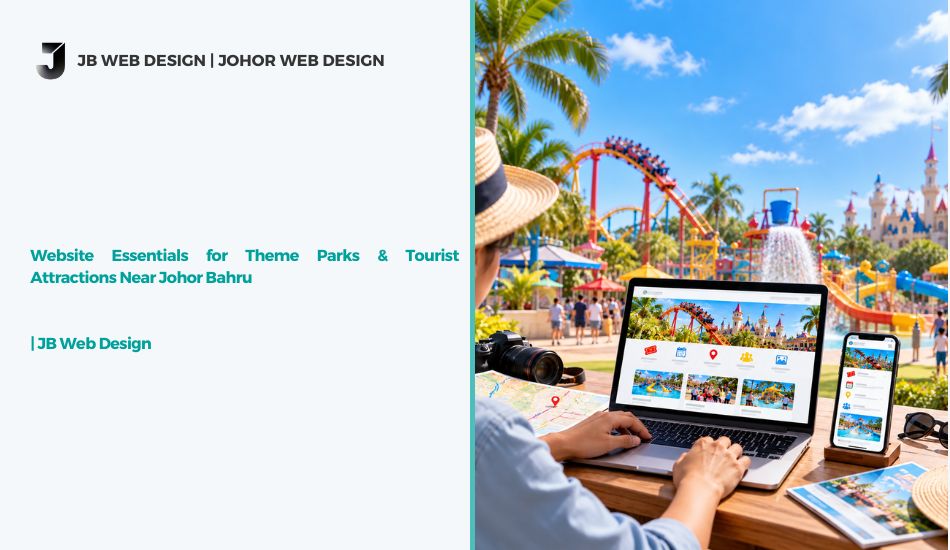
Website Essentials for Theme Parks & Tourist Attractions Near Johor Bahru
A good theme park website should do more than display attractive photos. It should help visitors check ticket prices, find opening hours, plan their journey and book tickets with confidence.
For theme parks and tourist attractions in Johor, a clear and mobile-friendly website can make it easier for interested visitors to plan a trip. Whether you operate a family attraction in Johor Bahru, an adventure park in Iskandar Puteri or a waterpark near Desaru Coast, your website should make important information easy to find.
A well-structured theme park website also helps visitors compare activities, understand available facilities and decide whether the attraction suits their family or travel plans.
In this guide, we explain the essential features of a theme park website, how they improve the visitor experience and what attraction owners should consider when building a new website or upgrading an existing one.
Why Does Your Theme Park Website Matter?
Johor has an active domestic tourism market. According to the Department of Statistics Malaysia’s Domestic Tourism Survey 2024, Johor recorded approximately 17.1 million domestic visitors and RM7.8 billion in domestic tourism receipts in 2024. These figures cover domestic tourism across Johor, not just theme parks or tourist attractions.
For attraction operators, this provides useful market context. Visitors may be planning family outings, school trips, weekend activities or short holidays. Before travelling, many people want to check practical details online.
A well-planned theme park website should answer these questions:
- What attractions and activities are available?
- How much do tickets cost?
- What are the opening days and hours?
- Is the attraction suitable for young children?
- How do visitors get there, and where can they park?
- Can tickets be booked online?
When this information is easy to find, visitors can plan with less uncertainty. Your staff may also spend less time answering the same basic questions.
A reliable theme park website gives visitors one convenient place to check essential details before making travel arrangements.
1. Make Ticket Booking Simple
Ticket booking should be one of the easiest tasks on your theme park website. Visitors should not have to search through several pages to find prices or discover how to make a reservation.
Display the available ticket types clearly, such as adult tickets, children’s tickets, family packages, annual passes or group bookings, where applicable. Explain what each option includes and highlight any important conditions.
If you offer online booking, place a clear Book Tickets button in a visible position. Make sure the booking process works properly on mobile phones, since visitors may make plans while travelling or discussing a family outing.
A practical theme park website design Johor Bahru businesses can benefit from should also make payment instructions and booking confirmation details easy to understand.
Before launching your website, test the entire booking journey. Check that visitors can select the correct date, review their order, complete payment and receive confirmation without unnecessary steps.
An effective theme park website should also explain booking changes, payment methods and ticket conditions before visitors complete their purchase.
2. Display Opening Hours and Visit Information Clearly
Visitors need accurate information before leaving home. Your theme park website should display opening hours, operating days, public holiday arrangements and planned closures in an easy-to-find location.
If operating hours change during school holidays or special events, update the information promptly. Outdated schedules can lead to disappointed visitors and unnecessary enquiries.
A useful visit information section can include:
- Daily opening and closing times
- Last admission time, if applicable
- Ticket prices and admission conditions
- Age, height or weight restrictions for relevant rides
- Parking information
- Food and drink policies
- Accessibility information
- Contact details for enquiries
For example, the official LEGOLAND Malaysia Resort website provides visitors with ticketing and visit-planning information. Similarly, Adventure Waterpark Desaru Coast offers information about its attractions and visitor experience.
These are useful local examples of the information visitors may look for before a trip. Your own tourist attraction website should present the details relevant to your operation rather than copying another attraction’s policies.
Keeping these details updated makes your theme park website more useful for both first-time visitors and returning guests.
3. Design for Mobile Visitors
A theme park website should work smoothly on smartphones, tablets and desktop computers. Mobile usability is especially important when visitors are checking directions, comparing ticket options or looking for last-minute information.
Use readable text, clear buttons and a simple navigation menu. Avoid placing essential details inside images that visitors may struggle to read.
Keep the main actions easy to reach, including ticket booking, directions, opening hours and contact information.
Page speed matters too. Large image files, unnecessary animations and poorly optimised scripts can make pages slow to load. Compress images, remove unnecessary features and test your pages on mobile connections.
Good theme park website design Johor Bahru operators can use should put visitors first. It should help people find what they need quickly instead of making them work through complicated menus.
When a theme park website is easy to navigate on a small screen, visitors can find directions and booking information without unnecessary frustration.
4. Use Real Photos and Helpful Videos
Visitors want to know what they can expect when they arrive. Good photos and short videos can show the atmosphere, activities, facilities and experiences that make your attraction different.
Choose images that accurately represent your venue. Show relevant rides, play areas, landscaped spaces, dining facilities or family activities. If you provide facilities for younger children or visitors with accessibility needs, include useful information and images where appropriate.
Keep images optimised so they do not slow down your theme park website. Add descriptive alternative text to meaningful images to help people using screen readers and improve accessibility.
Avoid using photos that create unrealistic expectations. Clear, genuine visuals help visitors decide whether your attraction suits their needs.
Combining genuine visuals with clear descriptions helps a theme park website communicate the visitor experience more effectively.
5. Make Directions and Local Information Easy to Find
Visitors should be able to work out how to reach your attraction without searching through unrelated pages.
Include your full address, an embedded map or a clear map link, parking details and useful travel information. If your attraction is near a recognised landmark, town or major road, mention it naturally to help visitors understand the location.
For businesses serving Johor Bahru and the wider Johor region, location information should reflect the actual area served. Depending on the venue, visitors may be travelling to Johor Bahru, Iskandar Puteri, Kulai, Kota Tinggi or Desaru.
Do not claim that every attraction is near Johor Bahru if travel times and distances differ significantly. Give accurate directions and encourage visitors to check current routes before travelling.
Your theme park website should also make it easy for visitors to contact your team if they need help finding the venue.
Accurate location details make your theme park website a more practical planning tool for visitors travelling around Johor.
6. Improve Local SEO for Your Tourist Attraction Website
A well-designed website is more useful when people can discover it through search engines. Local SEO helps search engines understand what your attraction offers and where it is located.
Start with clear page titles, useful headings and original descriptions of your attractions, facilities and visitor experiences. Use location names naturally where they help describe your business.
For example, an attraction in Iskandar Puteri should clearly identify its location rather than repeatedly inserting Johor Bahru into every paragraph. Relevant location information is more useful than keyword repetition.
Other practical steps include:
- Create or maintain an accurate Google Business Profile.
- Keep your business name, address and phone number consistent.
- Add useful descriptions for individual attractions and facilities.
- Use descriptive image file names and alternative text.
- Make important pages accessible through internal links.
- Encourage genuine customer reviews and respond professionally.
- Keep ticketing, opening hours and contact information up to date.
For more guidance, explore our Google SEO services.
A theme park website with relevant location pages and useful visitor information can better communicate its services to people searching online.
Local SEO cannot guarantee a particular ranking, but accurate information and useful content can help visitors and search engines understand your business more clearly.
7. Build Trust with Clear Policies and Contact Details
Visitors may hesitate to purchase tickets if they cannot find basic information about the attraction or its booking terms.
A trustworthy theme park website should provide clear contact details, cancellation or rescheduling policies, privacy information and terms of purchase where relevant. Explain how visitors can contact your team if a booking problem occurs.
If your attraction has ride restrictions, weather-related operating changes or special admission conditions, make these details easy to find.
Keep information consistent across your website, booking platform and business listings. If a policy changes, update the relevant pages rather than leaving conflicting details online.
For attractions that collect customer information or process online payments, review the security and privacy requirements that apply to your business. Use reputable payment services and protect the information visitors submit.
What Should a Theme Park Website Include?
Before launching or revamping your website, use this checklist to review the essentials.
Not every attraction needs a complicated website. A smaller family attraction may only need a few well-organised pages, while a larger theme park may need online ticketing, event listings, group booking forms and multiple attraction pages.
The right setup depends on your operating needs, visitor expectations and business goals.
Investing in a user-friendly theme park website is a practical step towards helping potential visitors discover your attraction and plan their visit.
How JB Web Design Can Help
At JB Web Design, we help businesses create websites that are clear, practical and built around their customers. For theme parks and tourist attractions, that means helping visitors find important information, understand the experience and take the next step with confidence.
Our web design services can help you plan a website structure that suits your attraction, whether you need a new website or want to improve an existing one.
We can also help you consider local SEO, mobile usability, content structure and ongoing website care. If your current website is difficult to update or no longer meets your needs, our website maintenance services can help you plan how to keep it maintained.
The goal is not simply to make your website look modern. It is to make it easier for visitors to plan a trip and easier for your team to manage important information.
Final Thoughts
A successful theme park website gives visitors the information they need before they arrive. Clear ticket options, accurate opening hours, mobile-friendly pages, helpful directions and trustworthy policies all contribute to a better online experience.
For attractions across Johor, including those serving Johor Bahru, Iskandar Puteri and Desaru, a well-organised website can support local discovery and make trip planning easier.
Start by reviewing your current website from a visitor’s point of view. Can someone find ticket prices, check opening hours and get directions within a few moments? If not, those are good places to begin.
A useful website does not need to be complicated. It needs to answer real questions, work reliably and help visitors take the next step.
Investing in a user-friendly theme park website is a practical way to make your attraction easier to discover and your visitor information easier to access.
Website Essentials for Theme Parks & Tourist Attractions Near Johor Bahru
A good theme park website should do more than display attractive photos. It should help visitors check ticket prices, find opening hours, plan their journey and book tickets with confidence.
For theme parks and tourist attractions in Johor, a clear and mobile-friendly website can make it easier for interested visitors to plan a trip. Whether you operate a family attraction in Johor Bahru, an adventure park in Iskandar Puteri or a waterpark near Desaru Coast, your website should make important information easy to find.
A well-structured theme park website also helps visitors compare activities, understand available facilities and decide whether the attraction suits their family or travel plans.
In this guide, we explain the essential features of a theme park website, how they improve the visitor experience and what attraction owners should consider when building a new website or upgrading an existing one.
Why Does Your Theme Park Website Matter?
Johor has an active domestic tourism market. According to the Department of Statistics Malaysia’s Domestic Tourism Survey 2024, Johor recorded approximately 17.1 million domestic visitors and RM7.8 billion in domestic tourism receipts in 2024. These figures cover domestic tourism across Johor, not just theme parks or tourist attractions.
For attraction operators, this provides useful market context. Visitors may be planning family outings, school trips, weekend activities or short holidays. Before travelling, many people want to check practical details online.
A well-planned theme park website should answer these questions:
- What attractions and activities are available?
- How much do tickets cost?
- What are the opening days and hours?
- Is the attraction suitable for young children?
- How do visitors get there, and where can they park?
- Can tickets be booked online?
When this information is easy to find, visitors can plan with less uncertainty. Your staff may also spend less time answering the same basic questions.
A reliable theme park website gives visitors one convenient place to check essential details before making travel arrangements.
1. Make Ticket Booking Simple
Ticket booking should be one of the easiest tasks on your theme park website. Visitors should not have to search through several pages to find prices or discover how to make a reservation.
Display the available ticket types clearly, such as adult tickets, children’s tickets, family packages, annual passes or group bookings, where applicable. Explain what each option includes and highlight any important conditions.
If you offer online booking, place a clear Book Tickets button in a visible position. Make sure the booking process works properly on mobile phones, since visitors may make plans while travelling or discussing a family outing.
A practical theme park website design Johor Bahru businesses can benefit from should also make payment instructions and booking confirmation details easy to understand.
Before launching your website, test the entire booking journey. Check that visitors can select the correct date, review their order, complete payment and receive confirmation without unnecessary steps.
An effective theme park website should also explain booking changes, payment methods and ticket conditions before visitors complete their purchase.
2. Display Opening Hours and Visit Information Clearly
Visitors need accurate information before leaving home. Your theme park website should display opening hours, operating days, public holiday arrangements and planned closures in an easy-to-find location.
If operating hours change during school holidays or special events, update the information promptly. Outdated schedules can lead to disappointed visitors and unnecessary enquiries.
A useful visit information section can include:
- Daily opening and closing times
- Last admission time, if applicable
- Ticket prices and admission conditions
- Age, height or weight restrictions for relevant rides
- Parking information
- Food and drink policies
- Accessibility information
- Contact details for enquiries
For example, the official LEGOLAND Malaysia Resort website provides visitors with ticketing and visit-planning information. Similarly, Adventure Waterpark Desaru Coast offers information about its attractions and visitor experience.
These are useful local examples of the information visitors may look for before a trip. Your own tourist attraction website should present the details relevant to your operation rather than copying another attraction’s policies.
Keeping these details updated makes your theme park website more useful for both first-time visitors and returning guests.
3. Design for Mobile Visitors
A theme park website should work smoothly on smartphones, tablets and desktop computers. Mobile usability is especially important when visitors are checking directions, comparing ticket options or looking for last-minute information.
Use readable text, clear buttons and a simple navigation menu. Avoid placing essential details inside images that visitors may struggle to read.
Keep the main actions easy to reach, including ticket booking, directions, opening hours and contact information.
Page speed matters too. Large image files, unnecessary animations and poorly optimised scripts can make pages slow to load. Compress images, remove unnecessary features and test your pages on mobile connections.
Good theme park website design Johor Bahru operators can use should put visitors first. It should help people find what they need quickly instead of making them work through complicated menus.
When a theme park website is easy to navigate on a small screen, visitors can find directions and booking information without unnecessary frustration.
4. Use Real Photos and Helpful Videos
Visitors want to know what they can expect when they arrive. Good photos and short videos can show the atmosphere, activities, facilities and experiences that make your attraction different.
Choose images that accurately represent your venue. Show relevant rides, play areas, landscaped spaces, dining facilities or family activities. If you provide facilities for younger children or visitors with accessibility needs, include useful information and images where appropriate.
Keep images optimised so they do not slow down your theme park website. Add descriptive alternative text to meaningful images to help people using screen readers and improve accessibility.
Avoid using photos that create unrealistic expectations. Clear, genuine visuals help visitors decide whether your attraction suits their needs.
Combining genuine visuals with clear descriptions helps a theme park website communicate the visitor experience more effectively.
5. Make Directions and Local Information Easy to Find
Visitors should be able to work out how to reach your attraction without searching through unrelated pages.
Include your full address, an embedded map or a clear map link, parking details and useful travel information. If your attraction is near a recognised landmark, town or major road, mention it naturally to help visitors understand the location.
For businesses serving Johor Bahru and the wider Johor region, location information should reflect the actual area served. Depending on the venue, visitors may be travelling to Johor Bahru, Iskandar Puteri, Kulai, Kota Tinggi or Desaru.
Do not claim that every attraction is near Johor Bahru if travel times and distances differ significantly. Give accurate directions and encourage visitors to check current routes before travelling.
Your theme park website should also make it easy for visitors to contact your team if they need help finding the venue.
Accurate location details make your theme park website a more practical planning tool for visitors travelling around Johor.
6. Improve Local SEO for Your Tourist Attraction Website
A well-designed website is more useful when people can discover it through search engines. Local SEO helps search engines understand what your attraction offers and where it is located.
Start with clear page titles, useful headings and original descriptions of your attractions, facilities and visitor experiences. Use location names naturally where they help describe your business.
For example, an attraction in Iskandar Puteri should clearly identify its location rather than repeatedly inserting Johor Bahru into every paragraph. Relevant location information is more useful than keyword repetition.
Other practical steps include:
- Create or maintain an accurate Google Business Profile.
- Keep your business name, address and phone number consistent.
- Add useful descriptions for individual attractions and facilities.
- Use descriptive image file names and alternative text.
- Make important pages accessible through internal links.
- Encourage genuine customer reviews and respond professionally.
- Keep ticketing, opening hours and contact information up to date.
For more guidance, explore our Google SEO services.
A theme park website with relevant location pages and useful visitor information can better communicate its services to people searching online.
Local SEO cannot guarantee a particular ranking, but accurate information and useful content can help visitors and search engines understand your business more clearly.
7. Build Trust with Clear Policies and Contact Details
Visitors may hesitate to purchase tickets if they cannot find basic information about the attraction or its booking terms.
A trustworthy theme park website should provide clear contact details, cancellation or rescheduling policies, privacy information and terms of purchase where relevant. Explain how visitors can contact your team if a booking problem occurs.
If your attraction has ride restrictions, weather-related operating changes or special admission conditions, make these details easy to find.
Keep information consistent across your website, booking platform and business listings. If a policy changes, update the relevant pages rather than leaving conflicting details online.
For attractions that collect customer information or process online payments, review the security and privacy requirements that apply to your business. Use reputable payment services and protect the information visitors submit.
What Should a Theme Park Website Include?
Before launching or revamping your website, use this checklist to review the essentials.
Not every attraction needs a complicated website. A smaller family attraction may only need a few well-organised pages, while a larger theme park may need online ticketing, event listings, group booking forms and multiple attraction pages.
The right setup depends on your operating needs, visitor expectations and business goals.
Investing in a user-friendly theme park website is a practical step towards helping potential visitors discover your attraction and plan their visit.
How JB Web Design Can Help
At JB Web Design, we help businesses create websites that are clear, practical and built around their customers. For theme parks and tourist attractions, that means helping visitors find important information, understand the experience and take the next step with confidence.
Our web design services can help you plan a website structure that suits your attraction, whether you need a new website or want to improve an existing one.
We can also help you consider local SEO, mobile usability, content structure and ongoing website care. If your current website is difficult to update or no longer meets your needs, our website maintenance services can help you plan how to keep it maintained.
The goal is not simply to make your website look modern. It is to make it easier for visitors to plan a trip and easier for your team to manage important information.
Final Thoughts
A successful theme park website gives visitors the information they need before they arrive. Clear ticket options, accurate opening hours, mobile-friendly pages, helpful directions and trustworthy policies all contribute to a better online experience.
For attractions across Johor, including those serving Johor Bahru, Iskandar Puteri and Desaru, a well-organised website can support local discovery and make trip planning easier.
Start by reviewing your current website from a visitor’s point of view. Can someone find ticket prices, check opening hours and get directions within a few moments? If not, those are good places to begin.
A useful website does not need to be complicated. It needs to answer real questions, work reliably and help visitors take the next step.
Investing in a user-friendly theme park website is a practical way to make your attraction easier to discover and your visitor information easier to access.