
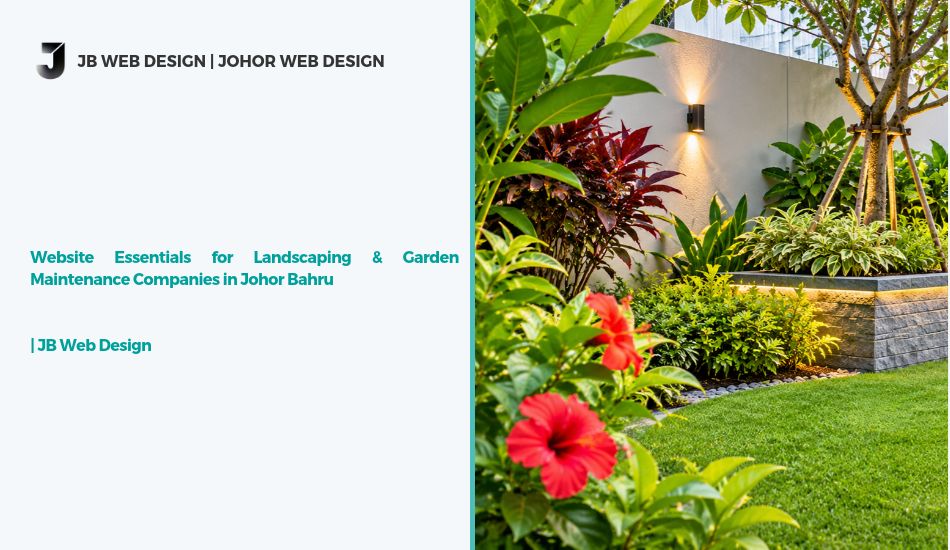
Website Essentials for Landscaping & Garden Maintenance Companies in Johor Bahru
Introduction: Turn Your Landscaping Work into a Strong Online Presence
A beautiful garden can make a property more welcoming, but potential customers need to see what your company can do before contacting you.
For landscaping and garden maintenance companies in Johor Bahru, Kulai and Singapore, a professional website is a useful way to showcase completed projects, explain services and receive quotation requests.
Good landscaping website design should make it easy for visitors to understand your work. From garden design and landscape construction to lawn care and regular maintenance, your website should show the services you genuinely provide.
A clear website helps customers answer three simple questions: What services do you offer? Which areas do you cover? How can they request a quotation?
1. Display Your Landscaping Services Clearly
Do not simply describe your company as a gardening or landscaping contractor. Customers may be looking for a specific service, so organise your offerings into clear categories.
Depending on your actual business scope, these may include:
- Garden Design: Planning garden layouts, plant arrangements and outdoor spaces.
- Landscape Construction: Building garden features, pathways, planting areas and other outdoor elements.
- Lawn Care: Grass cutting, lawn trimming, fertilising and general lawn maintenance.
- Tree and Hedge Trimming: Pruning, shaping and maintaining plants and hedges.
- Planting Services: Selecting and planting suitable trees, shrubs, flowers and ground cover.
- Irrigation Systems: Installing or maintaining suitable watering systems.
- Garden Maintenance: Regular weeding, watering, pruning, fertilising and garden clean-ups.
A well-organised landscaping services section helps visitors find the right information without contacting your company just to ask what you do.
Give each service a short explanation. You can also mention whether you serve residential gardens, commercial properties, offices or larger outdoor spaces.
Only list services your team genuinely provides. Clear information helps customers understand your capabilities and makes your landscaping website design more useful.
2. Showcase Real Garden and Landscaping Projects
Landscaping is a visual service. Customers often want to see your previous work before deciding whether your company is suitable for their property.
Use real photos to showcase projects such as:
- Residential gardens and landed properties
- Commercial landscapes and office gardens
- Outdoor spaces for restaurants and cafés
- Garden redesign and renovation projects
- Lawn installation and maintenance
- Planting and landscape construction
Before-and-after photos can be especially useful for showing how an outdoor space has changed.
Add a short description to each project. Mention the property type, work completed and services involved. If possible, explain the customer’s original requirements and how your team approached the project.
Avoid using stock photos as if they were your own completed work. Genuine project photos make your landscaping website design more trustworthy and help potential customers picture what your team can achieve.
3. Explain Your Landscaping Process
Customers may not know where to start when planning a new garden or improving an existing outdoor space. Explain your usual process so they understand what happens after making an enquiry.
A typical project may include:
- Initial Enquiry: Understand the customer’s ideas, property type and requirements.
- Site Visit: Review the outdoor space, ground conditions and existing plants.
- Design and Proposal: Recommend suitable layouts, plants and materials.
- Quotation: Explain the proposed work and estimated costs.
- Installation: Carry out the agreed planting, construction or landscaping work.
- Handover and Maintenance: Explain how to care for the completed garden and arrange ongoing maintenance if required.
The exact process depends on the size and type of project. A small garden clean-up may not need the same planning as a complete landscape renovation.
Explaining your process makes your landscaping services easier to understand and helps customers know what information to prepare before requesting a quotation.
4. Display Plants, Materials and Design Options
Customers may have an idea of how they want their garden to look, but they may not know which plants or materials are suitable.
Your website can introduce the options your company works with, such as:
- Flowering plants and ornamental shrubs
- Shade trees and small garden trees
- Grass and lawn varieties
- Decorative stones and gravel
- Garden pathways and paving materials
- Planting beds and garden borders
- Outdoor pots and landscape features
You can include photos and short descriptions to help customers understand the appearance and use of each option.
For projects in Johor Bahru and Kulai, explain that plant and material recommendations should consider the property’s sunlight, drainage, soil and maintenance needs. For Singapore projects, recommendations should also suit the site conditions and the client’s requirements.
Avoid promising that every plant will thrive in every garden. A suitable choice depends on the location and growing conditions.
Useful plant and material information makes landscaping website design more helpful because visitors can explore ideas before arranging a site visit.
5. Show Relevant Registrations and Professional Credentials
Some customers, especially commercial property owners and project managers, may want to check your company’s experience and qualifications before appointing a contractor.
In Malaysia, CIDB registration applies to contractors undertaking construction work covered by Act 520, subject to the law’s exemptions. CIDB’s definition of construction work includes certain landscaping work that forms part of or is necessary for construction projects. However, this should not be interpreted as meaning every routine gardening or lawn maintenance service automatically requires CIDB registration.
You can refer to the CIDB contractor registration guidelines to understand the requirements relevant to your actual work scope.
For Singapore, NParks operates the Landscape Company Register (LCR), a voluntary register for eligible landscape service providers. Companies applying must meet the relevant business and workforce requirements, including applicable Progressive Wage Model conditions.
NParks also states that landscape service suppliers need two consecutive years of LCR status to be awarded government landscape service contracts or have those contracts renewed. You can read the NParks LCR requirements and FAQs for details.
A professional landscaping website design approach should display only registrations, qualifications and memberships that your company actually holds. Avoid making general claims that cannot be verified.
6. Make Site Visits and Quotation Requests Easy
A potential customer should be able to contact your company without searching through several pages.
Your website can include:
- Click-to-call phone numbers
- WhatsApp enquiry links
- A simple quotation request form
- Business email address
- Clear service area information
A useful enquiry form can ask for the customer’s name, contact number, property location, property type and the service required.
You can also allow customers to upload garden photos. This gives your team a better idea of the space before arranging a site visit.
For larger projects, explain that an on-site assessment may be needed before confirming the design, materials and final quotation.
A simple enquiry process helps your landscaping website design turn website visitors into relevant business enquiries.
7. Landscaping Website Design in Johor Bahru, Kulai and Singapore
If your company serves multiple locations, make your service areas easy to understand. Customers should know whether your team can travel to their property and what services are available in each area.
You can organise your location information around:
- Johor Bahru: Garden design, landscape construction and regular garden maintenance.
- Kulai: Residential garden care, lawn maintenance and suitable landscaping projects.
- Singapore: Landscaping and maintenance services your company is qualified and able to provide.
Avoid listing locations that your team does not regularly serve. You can also create separate location pages with genuine project photos and relevant service information.
For landscaping website design in Johor Bahru and Singapore, useful local content is more valuable than simply repeating city names. Show actual projects, explain your service coverage and provide the correct contact details.
You can also refer to our local SEO checklist for Malaysian businesses to organise your service and location pages.
8. Promote Regular Garden Maintenance Plans
Not every customer needs a new garden design or a complete landscaping project. Some simply need regular help keeping their outdoor space clean and healthy.
If your company offers ongoing maintenance, explain what is included. Services may cover:
- Grass cutting and lawn trimming
- Weeding and soil care
- Plant watering
- Hedge and shrub pruning
- Fertilising
- Garden clean-ups
- General plant maintenance
You can also explain whether maintenance is available weekly, fortnightly or monthly, depending on your actual service arrangements.
For companies operating in Singapore, the Ministry of Manpower’s Progressive Wage Model covers eligible local landscape maintenance employees and includes wage and training requirements. These requirements are also relevant to NParks’ LCR registration conditions. You can read the MOM landscape sector PWM requirements.
Keep your service descriptions, contact details and project photos updated. If your website uses WordPress, regular updates and backups can help keep it reliable. You can learn more about our website maintenance services.
Conclusion: Build a Website That Shows the Value of Your Landscaping Work
For landscaping and garden maintenance companies in Johor Bahru, Kulai and Singapore, a website should do more than list gardening services. It should show completed projects, explain your work process and help customers request a site visit or quotation.
Effective landscaping website design brings together clear service pages, genuine garden photos, useful plant information and convenient contact options.
You do not need complicated website features to make a good impression. Start with real project photos, clear service descriptions and an easy enquiry process. A well-organised website can help your landscaping business build trust and attract more suitable customers.


Website Essentials for Landscaping & Garden Maintenance Companies in Johor Bahru
Introduction: Turn Your Landscaping Work into a Strong Online Presence
A beautiful garden can make a property more welcoming, but potential customers need to see what your company can do before contacting you.
For landscaping and garden maintenance companies in Johor Bahru, Kulai and Singapore, a professional website is a useful way to showcase completed projects, explain services and receive quotation requests.
Good landscaping website design should make it easy for visitors to understand your work. From garden design and landscape construction to lawn care and regular maintenance, your website should show the services you genuinely provide.
A clear website helps customers answer three simple questions: What services do you offer? Which areas do you cover? How can they request a quotation?
1. Display Your Landscaping Services Clearly
Do not simply describe your company as a gardening or landscaping contractor. Customers may be looking for a specific service, so organise your offerings into clear categories.
Depending on your actual business scope, these may include:
- Garden Design: Planning garden layouts, plant arrangements and outdoor spaces.
- Landscape Construction: Building garden features, pathways, planting areas and other outdoor elements.
- Lawn Care: Grass cutting, lawn trimming, fertilising and general lawn maintenance.
- Tree and Hedge Trimming: Pruning, shaping and maintaining plants and hedges.
- Planting Services: Selecting and planting suitable trees, shrubs, flowers and ground cover.
- Irrigation Systems: Installing or maintaining suitable watering systems.
- Garden Maintenance: Regular weeding, watering, pruning, fertilising and garden clean-ups.
A well-organised landscaping services section helps visitors find the right information without contacting your company just to ask what you do.
Give each service a short explanation. You can also mention whether you serve residential gardens, commercial properties, offices or larger outdoor spaces.
Only list services your team genuinely provides. Clear information helps customers understand your capabilities and makes your landscaping website design more useful.
2. Showcase Real Garden and Landscaping Projects
Landscaping is a visual service. Customers often want to see your previous work before deciding whether your company is suitable for their property.
Use real photos to showcase projects such as:
- Residential gardens and landed properties
- Commercial landscapes and office gardens
- Outdoor spaces for restaurants and cafés
- Garden redesign and renovation projects
- Lawn installation and maintenance
- Planting and landscape construction
Before-and-after photos can be especially useful for showing how an outdoor space has changed.
Add a short description to each project. Mention the property type, work completed and services involved. If possible, explain the customer’s original requirements and how your team approached the project.
Avoid using stock photos as if they were your own completed work. Genuine project photos make your landscaping website design more trustworthy and help potential customers picture what your team can achieve.
3. Explain Your Landscaping Process
Customers may not know where to start when planning a new garden or improving an existing outdoor space. Explain your usual process so they understand what happens after making an enquiry.
A typical project may include:
- Initial Enquiry: Understand the customer’s ideas, property type and requirements.
- Site Visit: Review the outdoor space, ground conditions and existing plants.
- Design and Proposal: Recommend suitable layouts, plants and materials.
- Quotation: Explain the proposed work and estimated costs.
- Installation: Carry out the agreed planting, construction or landscaping work.
- Handover and Maintenance: Explain how to care for the completed garden and arrange ongoing maintenance if required.
The exact process depends on the size and type of project. A small garden clean-up may not need the same planning as a complete landscape renovation.
Explaining your process makes your landscaping services easier to understand and helps customers know what information to prepare before requesting a quotation.
4. Display Plants, Materials and Design Options
Customers may have an idea of how they want their garden to look, but they may not know which plants or materials are suitable.
Your website can introduce the options your company works with, such as:
- Flowering plants and ornamental shrubs
- Shade trees and small garden trees
- Grass and lawn varieties
- Decorative stones and gravel
- Garden pathways and paving materials
- Planting beds and garden borders
- Outdoor pots and landscape features
You can include photos and short descriptions to help customers understand the appearance and use of each option.
For projects in Johor Bahru and Kulai, explain that plant and material recommendations should consider the property’s sunlight, drainage, soil and maintenance needs. For Singapore projects, recommendations should also suit the site conditions and the client’s requirements.
Avoid promising that every plant will thrive in every garden. A suitable choice depends on the location and growing conditions.
Useful plant and material information makes landscaping website design more helpful because visitors can explore ideas before arranging a site visit.
5. Show Relevant Registrations and Professional Credentials
Some customers, especially commercial property owners and project managers, may want to check your company’s experience and qualifications before appointing a contractor.
In Malaysia, CIDB registration applies to contractors undertaking construction work covered by Act 520, subject to the law’s exemptions. CIDB’s definition of construction work includes certain landscaping work that forms part of or is necessary for construction projects. However, this should not be interpreted as meaning every routine gardening or lawn maintenance service automatically requires CIDB registration.
You can refer to the CIDB contractor registration guidelines to understand the requirements relevant to your actual work scope.
For Singapore, NParks operates the Landscape Company Register (LCR), a voluntary register for eligible landscape service providers. Companies applying must meet the relevant business and workforce requirements, including applicable Progressive Wage Model conditions.
NParks also states that landscape service suppliers need two consecutive years of LCR status to be awarded government landscape service contracts or have those contracts renewed. You can read the NParks LCR requirements and FAQs for details.
A professional landscaping website design approach should display only registrations, qualifications and memberships that your company actually holds. Avoid making general claims that cannot be verified.
6. Make Site Visits and Quotation Requests Easy
A potential customer should be able to contact your company without searching through several pages.
Your website can include:
- Click-to-call phone numbers
- WhatsApp enquiry links
- A simple quotation request form
- Business email address
- Clear service area information
A useful enquiry form can ask for the customer’s name, contact number, property location, property type and the service required.
You can also allow customers to upload garden photos. This gives your team a better idea of the space before arranging a site visit.
For larger projects, explain that an on-site assessment may be needed before confirming the design, materials and final quotation.
A simple enquiry process helps your landscaping website design turn website visitors into relevant business enquiries.
7. Landscaping Website Design in Johor Bahru, Kulai and Singapore
If your company serves multiple locations, make your service areas easy to understand. Customers should know whether your team can travel to their property and what services are available in each area.
You can organise your location information around:
- Johor Bahru: Garden design, landscape construction and regular garden maintenance.
- Kulai: Residential garden care, lawn maintenance and suitable landscaping projects.
- Singapore: Landscaping and maintenance services your company is qualified and able to provide.
Avoid listing locations that your team does not regularly serve. You can also create separate location pages with genuine project photos and relevant service information.
For landscaping website design in Johor Bahru and Singapore, useful local content is more valuable than simply repeating city names. Show actual projects, explain your service coverage and provide the correct contact details.
You can also refer to our local SEO checklist for Malaysian businesses to organise your service and location pages.
8. Promote Regular Garden Maintenance Plans
Not every customer needs a new garden design or a complete landscaping project. Some simply need regular help keeping their outdoor space clean and healthy.
If your company offers ongoing maintenance, explain what is included. Services may cover:
- Grass cutting and lawn trimming
- Weeding and soil care
- Plant watering
- Hedge and shrub pruning
- Fertilising
- Garden clean-ups
- General plant maintenance
You can also explain whether maintenance is available weekly, fortnightly or monthly, depending on your actual service arrangements.
For companies operating in Singapore, the Ministry of Manpower’s Progressive Wage Model covers eligible local landscape maintenance employees and includes wage and training requirements. These requirements are also relevant to NParks’ LCR registration conditions. You can read the MOM landscape sector PWM requirements.
Keep your service descriptions, contact details and project photos updated. If your website uses WordPress, regular updates and backups can help keep it reliable. You can learn more about our website maintenance services.
Conclusion: Build a Website That Shows the Value of Your Landscaping Work
For landscaping and garden maintenance companies in Johor Bahru, Kulai and Singapore, a website should do more than list gardening services. It should show completed projects, explain your work process and help customers request a site visit or quotation.
Effective landscaping website design brings together clear service pages, genuine garden photos, useful plant information and convenient contact options.
You do not need complicated website features to make a good impression. Start with real project photos, clear service descriptions and an easy enquiry process. A well-organised website can help your landscaping business build trust and attract more suitable customers.