
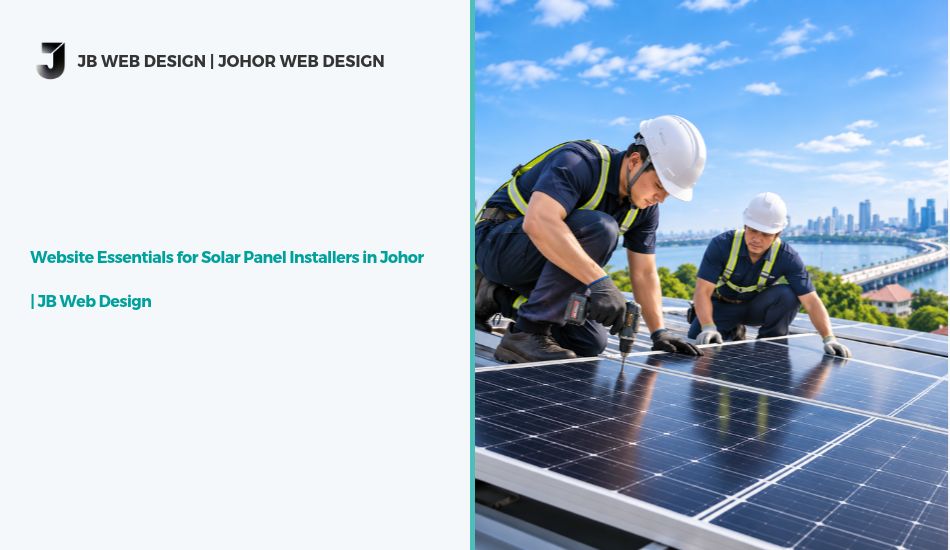
Website Essentials for Solar Panel Installers in Johor
Choosing the right website can make a real difference to how a solar business attracts customers. For solar installers in Johor, a professional website should do more than display solar panels and company information. It should help visitors understand the services, see previous projects, learn about available solar programmes, and contact the company easily.
The most effective approach is to build a website that answers customers’ questions before they make an enquiry. Clear service information, genuine project photos, useful explanations, and simple contact options can help turn website visitors into potential customers.
With growing interest in renewable energy and Malaysia’s Solar Accelerated Transition Action Programme (Solar ATAP), having a reliable online presence is becoming increasingly important for businesses offering solar solutions.
Why Do Solar Installers in Johor Need a Professional Website?
Many customers do not immediately know which solar company to contact. They usually compare several providers, check their experience, look at completed projects, and ask about installation costs before making a decision.
This is where a professional website becomes valuable.
For solar installers, a website acts as an online introduction to the business. It allows potential customers to understand what the company offers without having to make a phone call first.
In Johor, customers may include homeowners, factory operators, warehouse owners, commercial property managers, and business owners. Some companies may also receive enquiries from Singapore businesses exploring solar projects or regional partnerships.
A well-organised website helps these different audiences find relevant information quickly.
1. Clearly Explain Your Solar Panel Installation Services
One of the most important parts of a solar company website is its service page.
Visitors should be able to understand what the company actually provides. Avoid using only general descriptions such as “complete solar solutions”. Instead, explain each service in simple language.
Depending on the company’s actual capabilities, services may include:
- Residential rooftop solar systems
- Commercial and industrial solar installations
- Solar panel system design and consultation
- Solar inverter installation
- Solar system inspection and maintenance
- Solar performance monitoring
Each service should have its own description, explaining who it is suitable for and what customers can expect.
For example, homeowners may want to understand how rooftop solar works, while factory owners may be more interested in system capacity, electricity consumption, and installation planning.
Solar installers should also explain which services are available in Johor and whether projects outside the state can be considered.
2. Build Trust with Real Solar Installation Projects
Solar installations are significant investments. Customers want to know whether a company has the experience and technical capability to handle their property.
A project portfolio can help answer these concerns.
Rather than displaying only stock photos of solar panels, include genuine photographs from completed projects, with permission from the customers.
Useful project details include:
- Project location
- Property type
- Installation scope
- Solar system capacity, where verified
- Installation photographs
- Project challenges and solutions
For example, a completed rooftop project in Johor Bahru may demonstrate experience with residential properties, while an industrial project in Pasir Gudang could help attract factory and warehouse enquiries.
Only publish project figures that can be verified. Do not exaggerate energy savings, installation capacity, or customer results.
3. Provide Helpful Solar ATAP Information
Customers often have questions about government programmes before deciding whether to install solar panels.
In Malaysia, the Solar Accelerated Transition Action Programme (Solar ATAP) was implemented on 1 January 2026. According to SEDA Malaysia, the programme allows eligible consumers to use solar electricity for their own consumption while exporting surplus energy to the grid under the programme’s applicable arrangements.
This creates an opportunity for solar installers to provide useful educational content on their websites.
Consider including information about:
- What Solar ATAP is
- Who may be eligible to apply
- How the application process works
- What information customers should prepare
- Why property and electricity consumption assessments matter
However, solar companies should avoid promising that every customer will qualify or receive the same financial benefits.
Eligibility, technical assessments, installation capacity, and other requirements depend on the applicable programme guidelines and individual circumstances.
For accurate information, customers can refer to the official Solar ATAP information from SEDA Malaysia.
Keeping this information updated also helps position the business as a useful source of information rather than simply another company selling solar panels.
4. Make Your Website Suitable for Johor and Singapore Customers
Johor is an important market for businesses serving residential, commercial, and industrial customers. Companies operating around Johor Bahru, Iskandar Puteri, Kulai, Pasir Gudang, and other nearby areas can benefit from clearly showing their service coverage.
If the company genuinely serves these locations, mention them naturally on the website.
For example, a service area section could include:
- Johor Bahru
- Iskandar Puteri
- Kulai
- Pasir Gudang
- Skudai
- Senai
- Other available service areas in Johor
Some solar installers may also want to reach customers or business partners in Singapore.
If Singapore is part of the company’s actual service market, create a separate section explaining the services available to Singapore customers. Be clear about whether the business provides direct installation, consultation, equipment supply, or cross-border project support.
It is important not to present Malaysian solar regulations as applicable to Singapore. Singapore has its own requirements. For example, the Energy Market Authority (EMA) explains that certain non-residential electrical installations require licensing and the appointment of an appropriately licensed electrical worker.
Businesses should refer to the Singapore EMA solar installation guidance for the relevant local requirements.
Clear location information helps customers understand whether the company can support their project before submitting an enquiry.
5. Include Customer Reviews and Company Credentials
Customers are more comfortable contacting a company when they can see evidence of its experience and credibility.
A professional website should make important business information easy to find.
Consider displaying:
- Company background and experience
- Relevant industry registrations and qualifications
- Genuine customer testimonials
- Project references, where permitted
- Equipment and technology partners
- Warranty and after-sales service information
For solar installers in Johor, relevant credentials and technical qualifications can be particularly important because customers are dealing with electrical systems installed on their properties.
Only display registrations, certifications, and partnerships that the company actually holds.
Avoid using vague claims such as “Malaysia’s No. 1 solar company” unless there is reliable evidence to support them.
6. Make It Easy for Customers to Request a Solar Quotation
A website may attract visitors, but it also needs to make contacting the business simple.
Customers should not have to search through several pages to find a phone number or enquiry form.
Useful contact features include:
- WhatsApp enquiry buttons
- Click-to-call phone numbers
- Short quotation request forms
- Business email addresses
- Clear office and service area information
For a solar quotation form, consider asking for basic information such as:
- Customer name
- Contact number
- Property location
- Property type
- Monthly electricity bill range
- Preferred service
These details help the company understand the customer’s needs before arranging a consultation.
Keep the form short and avoid asking for unnecessary information at the first stage.
7. Optimise Your Website for Mobile Users and Google Search
Many potential customers browse websites using their smartphones. This means a solar company website should work properly on mobile devices.
Important website features include:
- Responsive page layouts
- Fast-loading images
- Easy-to-read text
- Simple navigation
- Visible contact buttons
- Secure HTTPS connections
Search engine optimisation (SEO) is equally important.
Solar installers should create useful pages around their actual services and locations instead of repeating the same keywords across every page.
For example, a company serving Johor Bahru could create a dedicated service page explaining its local installation services, project experience, and service coverage.
A properly structured website also makes it easier for Google to understand the business and its services.
For more guidance, read our SEO-ready website checklist and Local SEO checklist for Malaysian businesses.
What Should a Solar Company Website Achieve?
Ultimately, a website should help customers make informed decisions and give them a convenient way to contact the business.
For solar installers, this means providing clear service descriptions, genuine project examples, relevant programme information, and accessible enquiry options.
A website cannot guarantee enquiries or higher Google rankings. Results also depend on competition, website quality, search demand, reputation, and ongoing SEO work.
However, a well-planned website gives a solar business a stronger foundation for building online visibility and earning customer trust.
Final Thoughts
For solar installers in Johor, a professional website is more than an online company profile. It is an important business tool that introduces services, demonstrates experience, answers customer questions, and encourages enquiries.
Whether the company focuses on residential solar panel installation, commercial projects, or industrial rooftop systems, its website should make the information easy to understand and the next step easy to take.
Businesses serving both Johor and Singapore should also communicate their service coverage clearly and provide accurate information about the different local requirements.
A useful website does not need to be complicated. It needs to be clear, trustworthy, mobile-friendly, and built around what customers actually want to know.
If your solar business is ready to improve its online presence, start by reviewing whether your current website gives potential customers enough information and confidence to get in touch.
Website Essentials for Solar Panel Installers in Johor
Choosing the right website can make a real difference to how a solar business attracts customers. For solar installers in Johor, a professional website should do more than display solar panels and company information. It should help visitors understand the services, see previous projects, learn about available solar programmes, and contact the company easily.
The most effective approach is to build a website that answers customers’ questions before they make an enquiry. Clear service information, genuine project photos, useful explanations, and simple contact options can help turn website visitors into potential customers.
With growing interest in renewable energy and Malaysia’s Solar Accelerated Transition Action Programme (Solar ATAP), having a reliable online presence is becoming increasingly important for businesses offering solar solutions.
Why Do Solar Installers in Johor Need a Professional Website?
Many customers do not immediately know which solar company to contact. They usually compare several providers, check their experience, look at completed projects, and ask about installation costs before making a decision.
This is where a professional website becomes valuable.
For solar installers, a website acts as an online introduction to the business. It allows potential customers to understand what the company offers without having to make a phone call first.
In Johor, customers may include homeowners, factory operators, warehouse owners, commercial property managers, and business owners. Some companies may also receive enquiries from Singapore businesses exploring solar projects or regional partnerships.
A well-organised website helps these different audiences find relevant information quickly.
1. Clearly Explain Your Solar Panel Installation Services
One of the most important parts of a solar company website is its service page.
Visitors should be able to understand what the company actually provides. Avoid using only general descriptions such as “complete solar solutions”. Instead, explain each service in simple language.
Depending on the company’s actual capabilities, services may include:
- Residential rooftop solar systems
- Commercial and industrial solar installations
- Solar panel system design and consultation
- Solar inverter installation
- Solar system inspection and maintenance
- Solar performance monitoring
Each service should have its own description, explaining who it is suitable for and what customers can expect.
For example, homeowners may want to understand how rooftop solar works, while factory owners may be more interested in system capacity, electricity consumption, and installation planning.
Solar installers should also explain which services are available in Johor and whether projects outside the state can be considered.
2. Build Trust with Real Solar Installation Projects
Solar installations are significant investments. Customers want to know whether a company has the experience and technical capability to handle their property.
A project portfolio can help answer these concerns.
Rather than displaying only stock photos of solar panels, include genuine photographs from completed projects, with permission from the customers.
Useful project details include:
- Project location
- Property type
- Installation scope
- Solar system capacity, where verified
- Installation photographs
- Project challenges and solutions
For example, a completed rooftop project in Johor Bahru may demonstrate experience with residential properties, while an industrial project in Pasir Gudang could help attract factory and warehouse enquiries.
Only publish project figures that can be verified. Do not exaggerate energy savings, installation capacity, or customer results.
3. Provide Helpful Solar ATAP Information
Customers often have questions about government programmes before deciding whether to install solar panels.
In Malaysia, the Solar Accelerated Transition Action Programme (Solar ATAP) was implemented on 1 January 2026. According to SEDA Malaysia, the programme allows eligible consumers to use solar electricity for their own consumption while exporting surplus energy to the grid under the programme’s applicable arrangements.
This creates an opportunity for solar installers to provide useful educational content on their websites.
Consider including information about:
- What Solar ATAP is
- Who may be eligible to apply
- How the application process works
- What information customers should prepare
- Why property and electricity consumption assessments matter
However, solar companies should avoid promising that every customer will qualify or receive the same financial benefits.
Eligibility, technical assessments, installation capacity, and other requirements depend on the applicable programme guidelines and individual circumstances.
For accurate information, customers can refer to the official Solar ATAP information from SEDA Malaysia.
Keeping this information updated also helps position the business as a useful source of information rather than simply another company selling solar panels.
4. Make Your Website Suitable for Johor and Singapore Customers
Johor is an important market for businesses serving residential, commercial, and industrial customers. Companies operating around Johor Bahru, Iskandar Puteri, Kulai, Pasir Gudang, and other nearby areas can benefit from clearly showing their service coverage.
If the company genuinely serves these locations, mention them naturally on the website.
For example, a service area section could include:
- Johor Bahru
- Iskandar Puteri
- Kulai
- Pasir Gudang
- Skudai
- Senai
- Other available service areas in Johor
Some solar installers may also want to reach customers or business partners in Singapore.
If Singapore is part of the company’s actual service market, create a separate section explaining the services available to Singapore customers. Be clear about whether the business provides direct installation, consultation, equipment supply, or cross-border project support.
It is important not to present Malaysian solar regulations as applicable to Singapore. Singapore has its own requirements. For example, the Energy Market Authority (EMA) explains that certain non-residential electrical installations require licensing and the appointment of an appropriately licensed electrical worker.
Businesses should refer to the Singapore EMA solar installation guidance for the relevant local requirements.
Clear location information helps customers understand whether the company can support their project before submitting an enquiry.
5. Include Customer Reviews and Company Credentials
Customers are more comfortable contacting a company when they can see evidence of its experience and credibility.
A professional website should make important business information easy to find.
Consider displaying:
- Company background and experience
- Relevant industry registrations and qualifications
- Genuine customer testimonials
- Project references, where permitted
- Equipment and technology partners
- Warranty and after-sales service information
For solar installers in Johor, relevant credentials and technical qualifications can be particularly important because customers are dealing with electrical systems installed on their properties.
Only display registrations, certifications, and partnerships that the company actually holds.
Avoid using vague claims such as “Malaysia’s No. 1 solar company” unless there is reliable evidence to support them.
6. Make It Easy for Customers to Request a Solar Quotation
A website may attract visitors, but it also needs to make contacting the business simple.
Customers should not have to search through several pages to find a phone number or enquiry form.
Useful contact features include:
- WhatsApp enquiry buttons
- Click-to-call phone numbers
- Short quotation request forms
- Business email addresses
- Clear office and service area information
For a solar quotation form, consider asking for basic information such as:
- Customer name
- Contact number
- Property location
- Property type
- Monthly electricity bill range
- Preferred service
These details help the company understand the customer’s needs before arranging a consultation.
Keep the form short and avoid asking for unnecessary information at the first stage.
7. Optimise Your Website for Mobile Users and Google Search
Many potential customers browse websites using their smartphones. This means a solar company website should work properly on mobile devices.
Important website features include:
- Responsive page layouts
- Fast-loading images
- Easy-to-read text
- Simple navigation
- Visible contact buttons
- Secure HTTPS connections
Search engine optimisation (SEO) is equally important.
Solar installers should create useful pages around their actual services and locations instead of repeating the same keywords across every page.
For example, a company serving Johor Bahru could create a dedicated service page explaining its local installation services, project experience, and service coverage.
A properly structured website also makes it easier for Google to understand the business and its services.
For more guidance, read our SEO-ready website checklist and Local SEO checklist for Malaysian businesses.
What Should a Solar Company Website Achieve?
Ultimately, a website should help customers make informed decisions and give them a convenient way to contact the business.
For solar installers, this means providing clear service descriptions, genuine project examples, relevant programme information, and accessible enquiry options.
A website cannot guarantee enquiries or higher Google rankings. Results also depend on competition, website quality, search demand, reputation, and ongoing SEO work.
However, a well-planned website gives a solar business a stronger foundation for building online visibility and earning customer trust.
Final Thoughts
For solar installers in Johor, a professional website is more than an online company profile. It is an important business tool that introduces services, demonstrates experience, answers customer questions, and encourages enquiries.
Whether the company focuses on residential solar panel installation, commercial projects, or industrial rooftop systems, its website should make the information easy to understand and the next step easy to take.
Businesses serving both Johor and Singapore should also communicate their service coverage clearly and provide accurate information about the different local requirements.
A useful website does not need to be complicated. It needs to be clear, trustworthy, mobile-friendly, and built around what customers actually want to know.
If your solar business is ready to improve its online presence, start by reviewing whether your current website gives potential customers enough information and confidence to get in touch.