
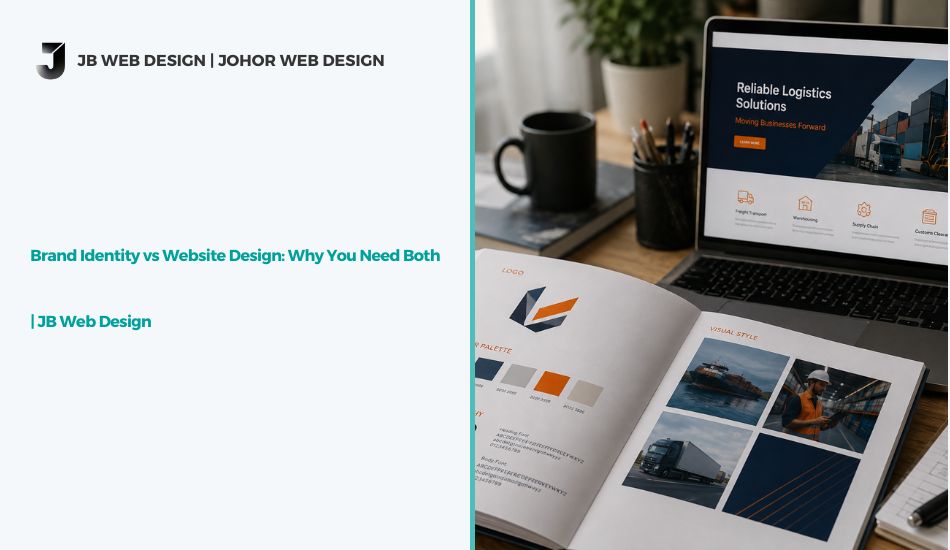
Brand Identity vs Website Design: Why You Need Both
Here’s the short answer: brand identity vs website design isn’t really a competition — it’s a false choice. A great logo without a functional website won’t convert visitors, and a well-built website without a clear brand identity won’t be remembered. You need both working together, not one instead of the other.
Before we go through why, here’s the quick version of how they’re different and why that difference matters.
The Quick Answer
Brand identity and website design solve different problems:
- Brand identity is who you are — your logo, colours, tone of voice, and the impression people form of your business
- Website design is how that identity gets experienced — the layout, navigation, speed, and functionality visitors actually interact with
A business with strong branding but a clunky website loses trust the moment someone tries to actually use the site. A business with a slick website but no real brand identity looks generic, even if it functions perfectly. Neither one covers for the other.
Why Brand Identity vs Website Design Is the Wrong Framing
Business owners often treat this as a sequencing question — do the logo first, then the website, or the other way around — when the more useful question is how the two connect. Brand identity vs website design only becomes a real conflict when they’re built separately, by different people, at different times, with nobody making sure they actually line up.
This matters more than it sounds. Research on brand consistency has found that companies presenting their brand consistently across every touchpoint — website included — see meaningfully higher revenue than those that don’t, with estimates in industry research on brand consistency ranging from around 10% up to 33% depending on how disciplined the execution is. A website that doesn’t match the rest of your brand isn’t just an aesthetic mismatch — it’s leaving real money on the table.
Website Design Branding: How the Two Actually Work Together
Website design branding is what happens when identity and function are treated as one project instead of two separate ones. In practice, that looks like:
Colours and typography carried through consistently.
Not just on the homepage, but across every page, form, and button — so nothing feels bolted on or mismatched.
Tone of voice reflected in actual website copy.
A friendly, approachable brand shouldn’t suddenly sound corporate and stiff the moment someone reaches the contact page.
Visual identity supporting usability, not fighting it.
Brand colours and fonts should still leave buttons readable and calls-to-action obvious — style should never come at the cost of a visitor actually being able to use the site. This ties closely into why a website’s first few seconds matter so much; a strong brand impression only works if the site behind it performs.
One clear source of truth.
When brand guidelines and the website are managed as a single, connected project, updates to one naturally carry through to the other, instead of slowly drifting apart over time.
What Happens When You Only Have One
A business with brand identity but no functional website usually ends up relying entirely on word-of-mouth or social media, because the one place that should convert curiosity into enquiries isn’t pulling its weight. Meanwhile, a business with a functional website but no real brand identity tends to blend into the background — visitors can complete a transaction, but they won’t remember who they bought from, and repeat business suffers as a result.
If your current site feels like it was built without much thought for how it represents your brand, that’s often one of the clearer signs your website needs a revamp — not because anything is technically broken, but because the two sides of your business have drifted apart.
Bringing Brand Identity and Website Design Together
The businesses that get this right treat brand identity vs website design as one connected project from the start, rather than commissioning a logo one year and a website the next with no one linking the two. If you’re starting from scratch, define the brand basics — colours, tone, positioning — before development begins, so the site is built around them rather than retrofitted afterward. If you already have a brand but the website doesn’t reflect it, that’s a website design branding gap worth closing before it costs you more in lost trust and missed revenue.
Final Thoughts
Brand identity vs website design was never really an either-or decision — it’s two halves of the same first impression. Get the identity right but the website wrong, and visitors won’t stick around long enough to notice the branding. Get the website right but the identity vague, and they’ll forget you the moment they leave. If you want both handled as one connected project rather than two disjointed ones, feel free to talk to our web design team or get in touch and we’ll show you how the two fit together for your business.




Brand Identity vs Website Design: Why You Need Both
Here’s the short answer: brand identity vs website design isn’t really a competition — it’s a false choice. A great logo without a functional website won’t convert visitors, and a well-built website without a clear brand identity won’t be remembered. You need both working together, not one instead of the other.
Before we go through why, here’s the quick version of how they’re different and why that difference matters.
The Quick Answer
Brand identity and website design solve different problems:
- Brand identity is who you are — your logo, colours, tone of voice, and the impression people form of your business
- Website design is how that identity gets experienced — the layout, navigation, speed, and functionality visitors actually interact with
A business with strong branding but a clunky website loses trust the moment someone tries to actually use the site. A business with a slick website but no real brand identity looks generic, even if it functions perfectly. Neither one covers for the other.
Why Brand Identity vs Website Design Is the Wrong Framing
Business owners often treat this as a sequencing question — do the logo first, then the website, or the other way around — when the more useful question is how the two connect. Brand identity vs website design only becomes a real conflict when they’re built separately, by different people, at different times, with nobody making sure they actually line up.
This matters more than it sounds. Research on brand consistency has found that companies presenting their brand consistently across every touchpoint — website included — see meaningfully higher revenue than those that don’t, with estimates in industry research on brand consistency ranging from around 10% up to 33% depending on how disciplined the execution is. A website that doesn’t match the rest of your brand isn’t just an aesthetic mismatch — it’s leaving real money on the table.
Website Design Branding: How the Two Actually Work Together
Website design branding is what happens when identity and function are treated as one project instead of two separate ones. In practice, that looks like:
Colours and typography carried through consistently.
Not just on the homepage, but across every page, form, and button — so nothing feels bolted on or mismatched.
Tone of voice reflected in actual website copy.
A friendly, approachable brand shouldn’t suddenly sound corporate and stiff the moment someone reaches the contact page.
Visual identity supporting usability, not fighting it.
Brand colours and fonts should still leave buttons readable and calls-to-action obvious — style should never come at the cost of a visitor actually being able to use the site. This ties closely into why a website’s first few seconds matter so much; a strong brand impression only works if the site behind it performs.
One clear source of truth.
When brand guidelines and the website are managed as a single, connected project, updates to one naturally carry through to the other, instead of slowly drifting apart over time.
What Happens When You Only Have One
A business with brand identity but no functional website usually ends up relying entirely on word-of-mouth or social media, because the one place that should convert curiosity into enquiries isn’t pulling its weight. Meanwhile, a business with a functional website but no real brand identity tends to blend into the background — visitors can complete a transaction, but they won’t remember who they bought from, and repeat business suffers as a result.
If your current site feels like it was built without much thought for how it represents your brand, that’s often one of the clearer signs your website needs a revamp — not because anything is technically broken, but because the two sides of your business have drifted apart.
Bringing Brand Identity and Website Design Together
The businesses that get this right treat brand identity vs website design as one connected project from the start, rather than commissioning a logo one year and a website the next with no one linking the two. If you’re starting from scratch, define the brand basics — colours, tone, positioning — before development begins, so the site is built around them rather than retrofitted afterward. If you already have a brand but the website doesn’t reflect it, that’s a website design branding gap worth closing before it costs you more in lost trust and missed revenue.
Final Thoughts
Brand identity vs website design was never really an either-or decision — it’s two halves of the same first impression. Get the identity right but the website wrong, and visitors won’t stick around long enough to notice the branding. Get the website right but the identity vague, and they’ll forget you the moment they leave. If you want both handled as one connected project rather than two disjointed ones, feel free to talk to our web design team or get in touch and we’ll show you how the two fit together for your business.