
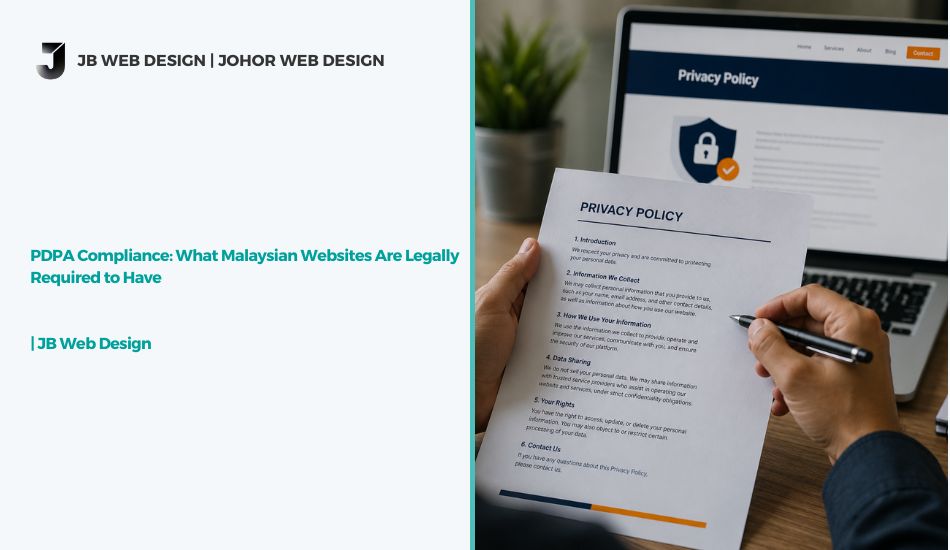
PDPA Compliance: What Malaysian Websites Are Legally Required to Have
Here’s the short answer: PDPA compliance for most Malaysian business websites comes down to five things — a proper privacy notice, valid consent for the data you collect, reasonable security measures, a way for people to access or correct their data, and (for many businesses now) a designated Data Protection Officer. If your site is missing more than one of these, you’re not just behind on best practice — you’re likely non-compliant with an amended law that now carries real penalties.
Before we go through each requirement, here’s why this matters more than it used to.
Quick note before we start: this article explains PDPA requirements in plain language for general understanding — it isn’t legal advice. For your specific situation, it’s worth having a lawyer or compliance advisor review your setup.
The Quick Answer
The five things most Malaysian business websites legally need for PDPA compliance are:
- A published Personal Data Protection Notice (privacy policy)
- A valid, clear consent mechanism for data collection and marketing
- Reasonable security measures around any data you store
- A working process for data access and correction requests
- A Data Protection Officer, if your business falls under the newer requirements
If your website was built years ago and hasn’t been reviewed since, there’s a good chance at least one of these is missing or outdated.
Why PDPA Compliance Isn’t Optional Anymore
Malaysia’s Personal Data Protection Act 2010 has been around for over a decade, but for most of that time, enforcement was light and many businesses treated their privacy policy as a formality — something to publish once and forget about. That changed with the Personal Data Protection (Amendment) Act 2024, which rolled out through 2025 and introduced real teeth: mandatory data breach notification, a formal requirement to appoint a Data Protection Officer for many organisations, and a maximum penalty that jumped from RM300,000 to RM1,000,000.
This is exactly why PDPA compliance now matters in a way it didn’t five years ago. It’s no longer just a document sitting quietly in your website footer — it’s an operational obligation with actual deadlines and consequences attached.
PDPA Malaysia Website: What Changed Recently
For a PDPA Malaysia website specifically, the amendments introduced two changes worth understanding clearly. First, organisations must now notify the Personal Data Protection Commissioner within 72 hours of becoming aware of a data breach likely to cause significant harm — which means your website’s data handling, especially around forms, payment info, and customer databases, needs to be something you actually understand, not just something a developer set up years ago and never revisited.
Second, many businesses are now required to appoint a Data Protection Officer, a named person responsible for privacy compliance rather than it being nobody’s specific job. For a PDPA Malaysia website collecting customer data through contact forms, bookings, or e-commerce checkouts, this isn’t a formality — it’s about having someone who can actually answer for how that data is handled if something goes wrong.
What Malaysian Websites Need for PDPA Compliance
Here’s what Malaysian websites need for PDPA compliance in more practical detail:
- A proper Personal Data Protection Notice.
This isn’t just a generic privacy policy template. It needs to clearly explain what data you collect, why, how it’s used, and who it might be shared with — written in a way an average visitor can actually understand, not buried in dense legal language.
- Valid, specific consent.
Pre-ticked checkboxes or vague “by using this site you agree” language generally isn’t considered valid consent. Visitors should know clearly what they’re agreeing to, particularly for marketing communications.
- Reasonable security measures.
This applies especially to any e-commerce site handling payment data, but also extends to basic things like keeping your site’s software updated — a point that connects directly to a broader SEO-ready website checklist, since technical health and compliance often overlap more than businesses expect.
- A working data access and correction process.
Visitors have the right to ask what personal data you hold on them and request corrections. Your website should make it reasonably easy to submit that kind of request, not force people to hunt for a way to contact you.
- A Data Protection Officer where required.
Not every small business needs one, but many now do under the amended rules — and it’s worth checking rather than assuming your business is exempt. Detailed guidance on the current requirements is publicly available if you want to check where your business stands.
What Happens If You Skip This
Beyond the legal risk, a site that’s clearly missing basic privacy practices — no visible policy, sketchy-looking consent forms, or a contact form that goes nowhere — quietly undermines visitor trust in the same way a slow or outdated design does. If your website hasn’t been touched in years, PDPA gaps are often just one symptom among several, alongside the kind of signs your website needs a revamp that tend to show up together.
Final Thoughts
PDPA compliance isn’t about fear-mongering over legal risk — it’s about making sure your website actually does what the law (and honestly, most visitors) expects: handle personal data honestly, securely, and transparently. If you’re not sure where your site currently stands, feel free to talk to our web design team or get in touch and we’ll help you figure out what needs attention.
Reminder: this article is general information, not legal advice. For a definitive compliance assessment, please consult a qualified lawyer familiar with Malaysian data protection law.




PDPA Compliance: What Malaysian Websites Are Legally Required to Have
Here’s the short answer: PDPA compliance for most Malaysian business websites comes down to five things — a proper privacy notice, valid consent for the data you collect, reasonable security measures, a way for people to access or correct their data, and (for many businesses now) a designated Data Protection Officer. If your site is missing more than one of these, you’re not just behind on best practice — you’re likely non-compliant with an amended law that now carries real penalties.
Before we go through each requirement, here’s why this matters more than it used to.
Quick note before we start: this article explains PDPA requirements in plain language for general understanding — it isn’t legal advice. For your specific situation, it’s worth having a lawyer or compliance advisor review your setup.
The Quick Answer
The five things most Malaysian business websites legally need for PDPA compliance are:
- A published Personal Data Protection Notice (privacy policy)
- A valid, clear consent mechanism for data collection and marketing
- Reasonable security measures around any data you store
- A working process for data access and correction requests
- A Data Protection Officer, if your business falls under the newer requirements
If your website was built years ago and hasn’t been reviewed since, there’s a good chance at least one of these is missing or outdated.
Why PDPA Compliance Isn’t Optional Anymore
Malaysia’s Personal Data Protection Act 2010 has been around for over a decade, but for most of that time, enforcement was light and many businesses treated their privacy policy as a formality — something to publish once and forget about. That changed with the Personal Data Protection (Amendment) Act 2024, which rolled out through 2025 and introduced real teeth: mandatory data breach notification, a formal requirement to appoint a Data Protection Officer for many organisations, and a maximum penalty that jumped from RM300,000 to RM1,000,000.
This is exactly why PDPA compliance now matters in a way it didn’t five years ago. It’s no longer just a document sitting quietly in your website footer — it’s an operational obligation with actual deadlines and consequences attached.
PDPA Malaysia Website: What Changed Recently
For a PDPA Malaysia website specifically, the amendments introduced two changes worth understanding clearly. First, organisations must now notify the Personal Data Protection Commissioner within 72 hours of becoming aware of a data breach likely to cause significant harm — which means your website’s data handling, especially around forms, payment info, and customer databases, needs to be something you actually understand, not just something a developer set up years ago and never revisited.
Second, many businesses are now required to appoint a Data Protection Officer, a named person responsible for privacy compliance rather than it being nobody’s specific job. For a PDPA Malaysia website collecting customer data through contact forms, bookings, or e-commerce checkouts, this isn’t a formality — it’s about having someone who can actually answer for how that data is handled if something goes wrong.
What Malaysian Websites Need for PDPA Compliance
Here’s what Malaysian websites need for PDPA compliance in more practical detail:
- A proper Personal Data Protection Notice.
This isn’t just a generic privacy policy template. It needs to clearly explain what data you collect, why, how it’s used, and who it might be shared with — written in a way an average visitor can actually understand, not buried in dense legal language.
- Valid, specific consent.
Pre-ticked checkboxes or vague “by using this site you agree” language generally isn’t considered valid consent. Visitors should know clearly what they’re agreeing to, particularly for marketing communications.
- Reasonable security measures.
This applies especially to any e-commerce site handling payment data, but also extends to basic things like keeping your site’s software updated — a point that connects directly to a broader SEO-ready website checklist, since technical health and compliance often overlap more than businesses expect.
- A working data access and correction process.
Visitors have the right to ask what personal data you hold on them and request corrections. Your website should make it reasonably easy to submit that kind of request, not force people to hunt for a way to contact you.
- A Data Protection Officer where required.
Not every small business needs one, but many now do under the amended rules — and it’s worth checking rather than assuming your business is exempt. Detailed guidance on the current requirements is publicly available if you want to check where your business stands.
What Happens If You Skip This
Beyond the legal risk, a site that’s clearly missing basic privacy practices — no visible policy, sketchy-looking consent forms, or a contact form that goes nowhere — quietly undermines visitor trust in the same way a slow or outdated design does. If your website hasn’t been touched in years, PDPA gaps are often just one symptom among several, alongside the kind of signs your website needs a revamp that tend to show up together.
Final Thoughts
PDPA compliance isn’t about fear-mongering over legal risk — it’s about making sure your website actually does what the law (and honestly, most visitors) expects: handle personal data honestly, securely, and transparently. If you’re not sure where your site currently stands, feel free to talk to our web design team or get in touch and we’ll help you figure out what needs attention.
Reminder: this article is general information, not legal advice. For a definitive compliance assessment, please consult a qualified lawyer familiar with Malaysian data protection law.